Why Version Control Exists: The Pendrive Problem
Discovering Why Version Control Matters

In today's world of software development, version control is a fundamental part of the process. If you're familiar with platforms like GitHub or GitLab, you probably know how essential version control has become in managing and collaborating on code. But it wasn’t always this way. Before the advent of these systems, developers had to rely on clunky methods of file management—methods that often led to chaos and confusion.
In this blog, we'll dive into why version control became mandatory and use a simple analogy—the pen drive problem—to illustrate the challenges developers faced before these systems existed.
The Pen drive Analogy in Software Development
Imagine you're working on a project and need to transfer files between different devices. You might use a pen drive or USB stick, copying files back and forth to ensure you're working on the latest version. At first, it seems like an easy solution: you’re moving files from one place to another, keeping everything in sync.
But here’s the problem: files get renamed, overwritten, or lost along the way. You end up with versions of the same file that look like this:
Eventually, you lose track of which one is the actual “final” version. And worse, if someone else is working on a different copy of the file, they could overwrite your changes without you even knowing it.
This might seem like a minor inconvenience when working with a single file on your computer, but imagine dealing with this problem when multiple developers are involved in a large project. This is exactly what happened before version control systems (VCS) like Git became the standard for managing code.
Problems Faced Before Version Control Systems
Before the widespread adoption of version control, developers faced several problems. These weren’t just minor annoyances; they were major roadblocks that slowed down development and made collaboration difficult, if not impossible.
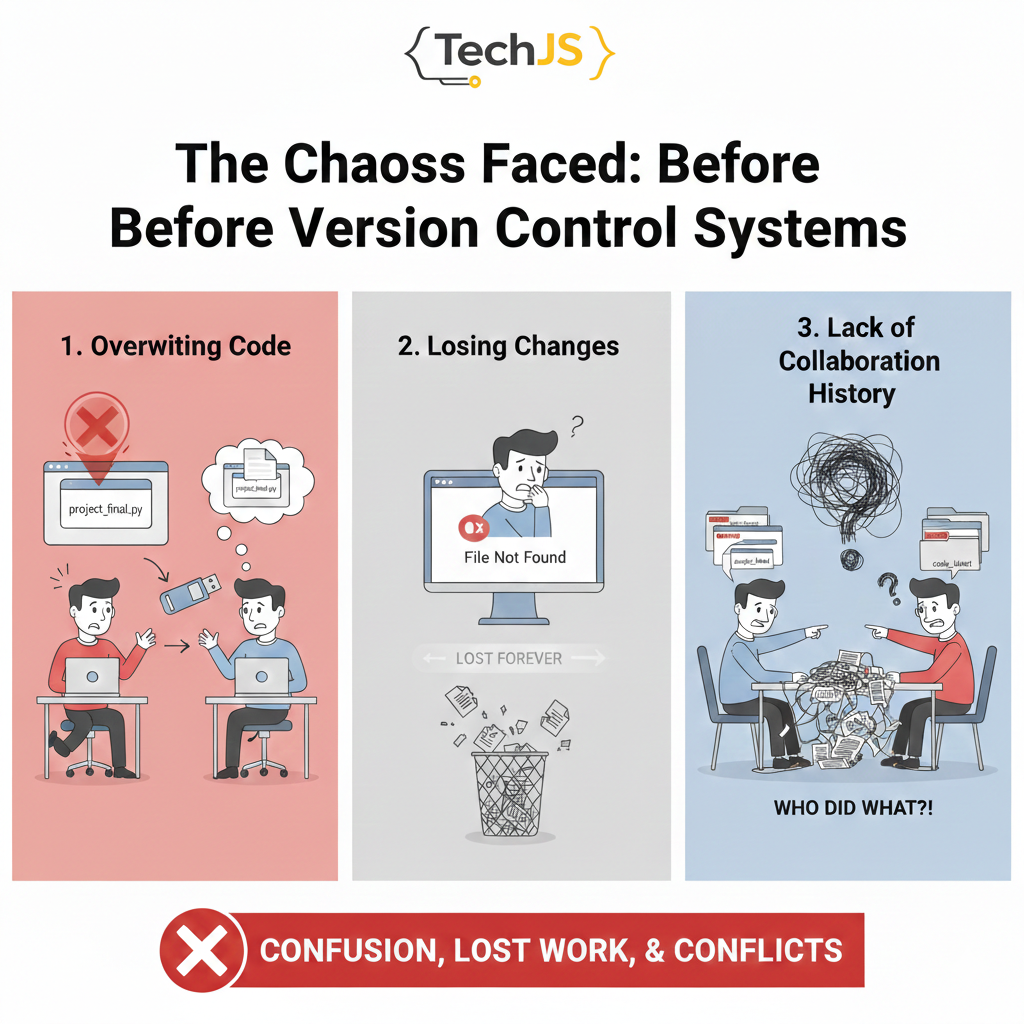
1. Overwriting Code
Without any way of tracking changes, it was easy for one developer to overwrite another's work. Since files were being manually copied or emailed, there was no centralized system to ensure everyone was working on the latest version. For example:
Developer A works on
project_final.pyand sends it to Developer B via email.Developer B receives the file, makes some changes, and overwrites Developer A’s file, unaware that Developer A had already made modifications.
Suddenly, all of Developer A’s work is lost, and there’s no easy way to recover it.
2. Losing Changes
Version control systems allow you to "commit" changes and create checkpoints, so you can always roll back to an earlier version of your code. Without version control, however, developers had no such luxury. Any significant change could potentially overwrite or erase important code. For example:
Developer A may make changes to a file, but forget to save it properly or accidentally delete it.
Since there’s no record of the code, the changes are lost forever.
This lack of safety net made developers hesitant to experiment with new ideas, knowing that any mistake could be catastrophic.
3. Lack of Collaboration History
Without version control, there was no way to track who made which changes. If multiple people were working on the same file, it was difficult to know what changes had been made, by whom, and why. This led to confusion, duplicated work, and conflicts. For example:
Developer A and Developer B are both working on the same code file but independently without knowledge of each other's changes.
When they eventually try to combine their work, there’s no way to reconcile the differences. The result is a tangled mess of conflicting code.
Real-World Team Collaboration Problems
Now, imagine this problem on a larger scale. You’re part of a team of developers working on the same project. Each developer is working on their own version of the code, but they’re all sending different files back and forth via email or USB sticks. The result?
Multiple copies of the same file exist in different folders:
project_final_v1.py,project_final_v2.py,project_final_revised.py, and so on.Developers are unaware of what changes others have made, leading to conflicting versions of the code.
One developer might accidentally overwrite someone else's changes, and since there’s no version history, there's no easy way to undo the error.
This chaotic workflow leads to confusion, lost work, and hours of wasted time trying to reconcile all the versions. The more developers involved, the worse it gets.
Why Version Control Became Mandatory in Modern Development
With these issues in mind, version control systems like Git were created to solve the pendrive problem and bring order to the chaos. Here’s why version control became essential:
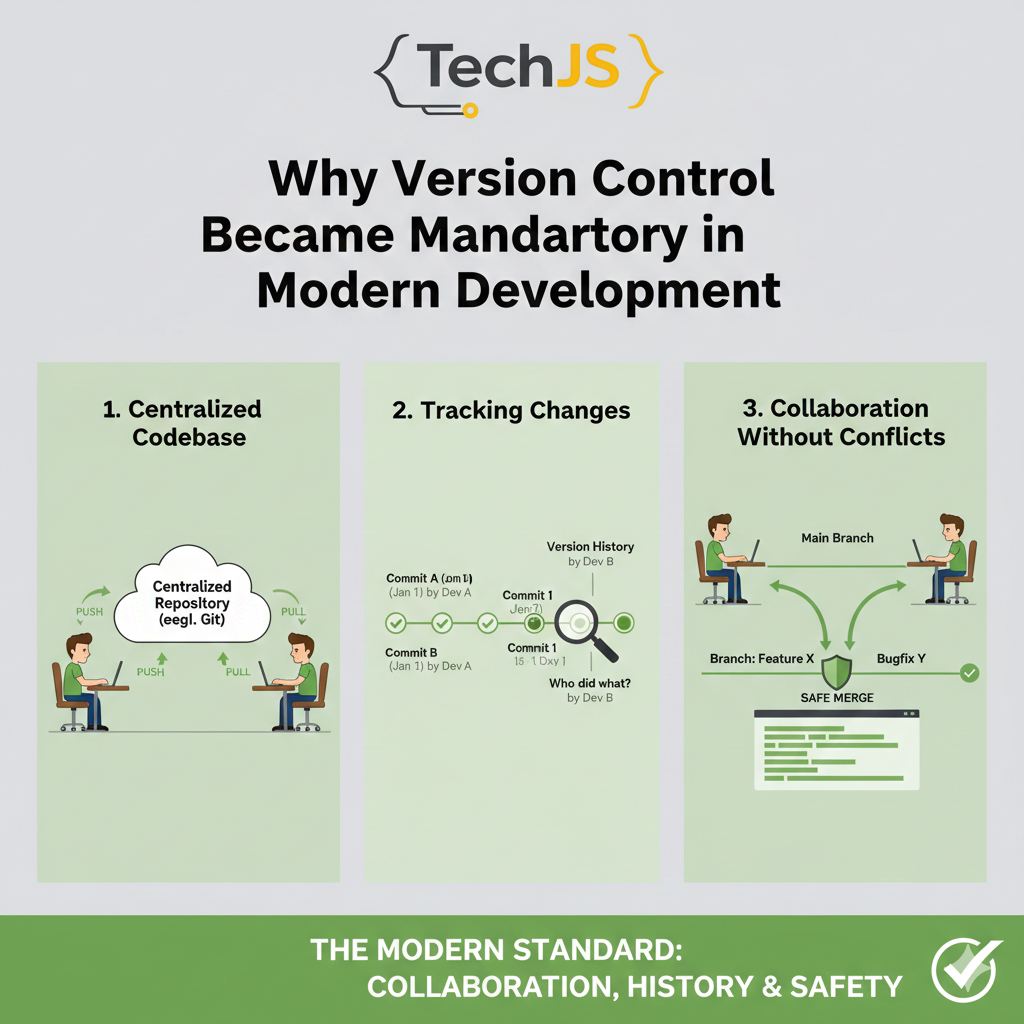
1. Centralised Code base
Version control allows all developers to work with the same centralised repository. Instead of managing dozens of copies of files, developers can clone or pull the latest version from the repository, ensuring everyone is working on the same base. For example:
Before: Developers send files back and forth, leading to a mess of duplicate versions.
After: Developers pull the latest version from the central repository, work on it, and push their changes back, ensuring a synchronised workflow.
2. Tracking Changes
Every change made to the code is recorded in the version control system. You can see who made the change, what was changed, and when it was changed. This provides a clear and transparent history of the project. For example:
Before: No way to know who changed what or when.
After: Each commit is timestamped, and developers can leave detailed messages explaining their changes. If something goes wrong, you can always track it down.
3. Collaboration Without Conflicts
With version control, multiple developers can work on the same code without stepping on each other's toes. When changes conflict, version control tools highlight the differences and allow developers to resolve them before committing the final version.
Before: Developers work on separate versions of the same file, leading to conflicts when trying to merge changes.
After: Version control allows developers to work on different branches and merge their work into the main codebase without breaking things.
4. Branching and Merging
Branching allows developers to work on different features or bug fixes without affecting the main codebase. Once the work is done, it can be safely merged back into the main branch, ensuring that the code remains stable. For example:
Before: Developers make changes directly to the main file, risking stability.
After: Developers create branches for new features or fixes and only merge them once they're confident they work.
Conclusion
Version control has revolutionized software development by solving the pendrive problem. It has brought structure, safety, and transparency to a previously chaotic process. Developers no longer need to worry about losing their changes, overwriting code, or dealing with confusing file versions.
In today’s fast-paced development world, version control is not just a tool—it’s a necessity. If you’re still working without it, it’s time to start learning tools like Git. With it, you can collaborate more effectively, manage your code with ease, and focus on what really matters: writing great software.